Skip to content

Estimated Reading Time: 8 minutes
Key Takeaways
-
Standard homeowners insurance rarely covers rainwater harvesting systems fully — written confirmation from your insurer is essential
-
A complete rainwater system can cost several thousand to tens of thousands of dollars, making the coverage question more financially urgent than most green homeowners expect
-
Coverage gaps typically appear in three areas: physical collection equipment, water quality liability, and code compliance costs after a covered loss
-
State regulations on rainwater collection vary significantly across the U.S. and directly shape what insurers will and won’t cover
-
Reviewing your policy’s “other structures,” “personal property,” and exclusions sections together — not separately — is where the real answers live
There’s a quiet assumption running through a lot of green homeowner thinking. Do something responsible for the environment and your financial protection will reward you for it. Rainwater harvesting fits that mindset perfectly. You’re reducing demand on municipal water supplies, cutting utility costs, and capturing something that literally falls from the sky. Sounds straightforward.
But the insurance side of it isn’t straightforward at all.
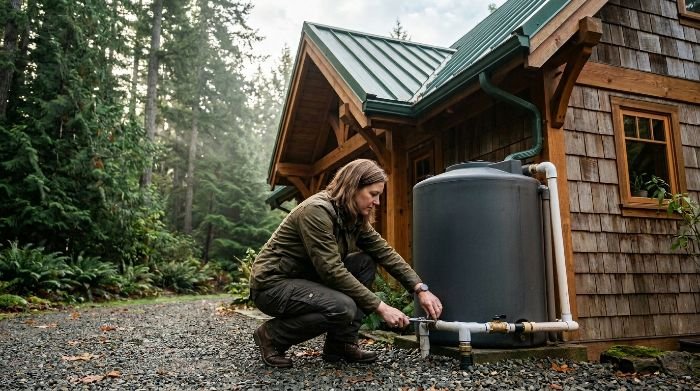
Rainwater harvesting system insurance sits in a niche coverage territory that even experienced agents sometimes mishandle. Systems range from a simple 55-gallon barrel attached to a downspout all the way to large underground cisterns with filtration pumps, UV sterilizers, and pressurized lines running directly into a home. Those aren’t equivalent risks, and insurers don’t treat them as equivalent either.
This guide walks through what’s actually at stake, where coverage typically falls short, and what green homeowners across the U.S. should do right now to make sure they’re not funding a system their policy quietly leaves exposed.
Where Standard Homeowners Insurance Falls Short
Most homeowners operate on a reasonable assumption — anything on or near their property falls under their HO-3 policy. That logic works well for gutters, detached sheds, and backyard fencing. For rainwater harvesting systems, it breaks down quickly.
A basic collection barrel may qualify under personal property coverage or the “other structures” section of a standard policy. But sub-limits matter enormously here. Other structures coverage typically runs at around 10% of the dwelling limit. On a $350,000 home, that’s roughly $35,000 — and that same bucket also covers your fence, storage shed, detached garage, and anything else not physically attached to the main structure. A rainwater system doesn’t get its own reserved portion of that limit.
Underground cisterns create a sharper problem. Many standard policies contain exclusion language around underground structures or address them ambiguously enough that a claims adjuster has real room to work with. Excavating and replacing a buried tank after freeze damage can be a significant expense — one that lands entirely on the homeowner when underground structures fall outside covered perils.
Think about it this way: the question isn’t just “is my system covered?” The real question is “is my system covered adequately, at full replacement value, for the specific ways it can fail?” Those are two completely different conversations.
Pump systems, UV filtration units, and pressure regulators add another layer of uncertainty. Insurers classify these components differently depending on whether they sit inside the home, inside a detached structure, or out in the yard. Classification determines both the coverage category and the applicable limit.
For homeowners who’ve also added solar infrastructure, the parallel is instructive. Solar panel insurance protection follows the same pattern — equipment that feels permanent and structural often sits in an ambiguous coverage zone until someone asks the right questions explicitly.
The Liability Side Most Green Homeowners Never Consider
Physical system coverage is one problem. Water quality liability is a separate one — and it tends to catch green homeowners completely off guard.
If harvested rainwater goes only to outdoor irrigation, liability stays relatively contained. But many homeowners route collected water into toilet flushing systems, laundry, or with certified filtration, into the home’s potable supply. The moment harvested water contacts surfaces that humans or animals regularly use, the liability exposure changes shape.
Roof runoff isn’t pristine. It can pick up particulate pollution, traces from roofing materials, and in some regions, residual agricultural chemicals. If someone becomes ill after contact with water that passed through your system — and your insurer wasn’t told the system existed — your personal liability coverage may not respond the way you expect.
The Insurance Information Institute notes that personal liability coverage within homeowners policies generally responds when bodily injury or property damage results from policyholder negligence. The key underwriting question is whether an undisclosed non-standard water system represents a material change in the home’s risk profile. Many carriers treat it as exactly that — particularly for systems connected to indoor plumbing.
The practical path forward is straightforward. Tell your insurer what you have. Disclose every component, the water’s intended use, and whether any part of the system connects to your home’s plumbing. Some carriers add a specific endorsement. Others adjust premiums modestly. A small number may push back on complex indoor-connected configurations. None of those outcomes is worse than a denied claim tied to an undisclosed system.
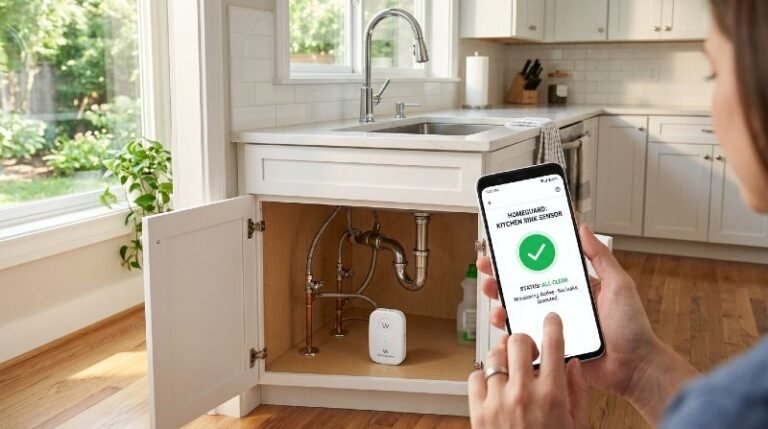
Homeowners who’ve installed smart monitoring on their water systems — sensors tracking tank levels, pressure, and filtration performance — should also confirm coverage for that equipment separately. Smart home leak detection insurance addresses exactly this kind of technology and pairs naturally with harvesting coverage since early detection can prevent a system malfunction from becoming a major claim.
How State Regulations Affect Your Coverage Options
Rainwater harvesting isn’t uniformly legal or uniformly regulated across the United States. The legal standing of your system in your state directly affects what coverage is available to you — and what can potentially be denied.
As of May 2026, states including Texas, Oregon, Washington, and California permit residential rainwater harvesting, though each has its own rules around collection volume, permitted uses, and in some cases registration requirements. Some states restrict indoor use unless the system meets certified treatment standards. Others limit collection volumes through specific statutes. Rules also vary at the local level, so checking with your state’s department of environmental quality or water resources board is the right starting point.
The EPA’s WaterSense program maintains resources on water efficiency and conservation practices that homeowners can reference for general guidance on responsible water use.
Why does legal status matter for insurance? Most homeowners policies include language stating they won’t cover losses connected to code violations or unpermitted modifications on the property. If your system exceeds what your local code permits, or connects to indoor plumbing in a way your jurisdiction doesn’t allow, an insurer may use that as grounds to contest a claim — even when the claim itself isn’t directly caused by the system.
The National Association of Insurance Commissioners (NAIC) consistently advises that homeowners treat any significant property modification as a disclosure event. Non-standard systems — alternative energy installations, water collection infrastructure, and similar additions — are among the most frequently undisclosed changes at policy renewal. That silence can create a material misrepresentation problem that surfaces at the worst possible moment.

What Your Policy Actually Needs to Cover
When you sit down with your agent or review your policy independently, there are specific coverage categories to work through. Several require explicit endorsements to function properly and won’t appear in a standard HO-3 automatically.
Rainwater Harvesting System Coverage Overview
| System Component | What Coverage Protects | Typical Standard Policy Status | Endorsement Often Needed? |
|---|---|---|---|
| Above-ground collection barrels | Physical damage, theft, storm loss | Sometimes included under personal property at lower limits | Rarely for low-value systems |
| Underground cisterns | Freeze cracking, collapse, excavation costs | Frequently excluded or ambiguously addressed | Yes — in most cases |
| Pump and filtration equipment | Mechanical breakdown, storm or freeze damage | May fall under dwelling or personal property depending on installation location | Often yes for larger systems |
| Piping connected to home plumbing | Leak damage, pipe failure from system | Varies significantly by carrier and policy form | Frequently required |
| Water quality liability | Illness or injury caused by harvested water | May be excluded if system is undisclosed | Yes — strongly recommended for indoor-use systems |
| Code upgrade costs after a loss | Rebuilding system to current local code post-damage | Not included in standard replacement cost coverage | Yes — ordinance or law endorsement needed |
Above-ground collection barrels
Underground cisterns
Pump and filtration equipment
Piping connected to home plumbing
Water quality liability
Code upgrade costs after a loss
Rainwater System Coverage Gap Checker
Check if your current policy likely covers your rainwater system components
This tool provides general guidance only. Actual coverage depends on your specific policy terms. Always consult your insurance professional for personalized advice.
The patterns in this table reflect general industry practice across U.S. homeowners carriers. Your specific policy language governs actual coverage in every case.
The code upgrade endorsement — often labeled “ordinance or law coverage” on a declarations page — deserves particular attention. If your rainwater system sustains a covered loss and local code requires rebuilding to a newer standard than your original installation, standard replacement cost coverage won’t bridge that gap. The endorsement does. Harvesting regulations in many states have grown more specific since 2022, meaning systems installed several years ago may face meaningful rebuild cost gaps.
For homeowners planning a new green build or major renovation, exploring eco-friendly home insurance discounts early in the process can surface carriers already comfortable underwriting non-standard sustainable systems. Starting with the right insurer from the beginning saves friction later.
The Bundling Mistake That Leaves Real Gaps Open
A natural instinct is to assume that purchasing a green home endorsement solves everything. It doesn’t.
Green home insurance endorsements available from several U.S. carriers as of 2026 typically focus on certified sustainable rebuild materials. When your home suffers a covered loss, these endorsements help cover the cost difference between standard replacement materials and eco-certified equivalents. That’s genuinely useful — but it’s a rebuild quality enhancement. It doesn’t function as standalone coverage for your harvesting system’s operating components at replacement value.
Read the endorsement language carefully. Look for whether your cistern, pump, and filtration equipment are defined as covered property at their actual replacement value. Look for whether indoor water connections create any exclusion. Look for whether the system’s value is scheduled separately or absorbed into a broader property category with shared limits.
Homeowners who’ve installed residential wind turbines navigate the same problem. Residential wind turbine insurance requires the same explicit coverage confirmation — green energy equipment sits in a gap between standard dwelling coverage and specialty endorsements that many homeowners discover only after a loss. The pattern repeats across sustainable home systems.
The practical step here is straightforward. Get a separate coverage confirmation for your rainwater system as a defined asset with its own scheduled value. Don’t let it float inside a general property category where the limit may be shared, capped, or subject to exclusions that weren’t written with alternative water systems in mind.
What Insuring a Rainwater System Costs in 2026
No single national rate exists. Premiums depend on system size, complexity, indoor versus outdoor use, your state’s regulatory environment, and your current carrier’s underwriting appetite for non-standard water systems.
Small above-ground barrel systems with modest replacement values typically sit within existing personal property or other structures limits at no additional premium — provided the system is disclosed. Disclosure costs nothing. Skipping it can be expensive.
Mid-range systems with buried tanks, pump infrastructure, and filtration generally require a scheduled endorsement or inland marine floater. Industry practice suggests endorsement costs for systems in this range can vary considerably depending on carrier, state, and the specifics of the installation. That’s not a quote — your actual premium requires a conversation with a licensed agent who can review your system’s configuration and value directly.
Large-scale systems with indoor plumbing integration or potable water certification move into specialty coverage territory. Independent brokers who work regularly with custom or high-value green homes are better positioned to handle these cases than standard carriers whose underwriting guidelines weren’t built with complex alternative water systems in mind.
The cost of inadequate coverage is more concrete. Repairing or replacing a buried cistern, pump system, and filtration equipment after a major loss can run into thousands or tens of thousands of dollars depending on system size and local labor costs. A water quality liability claim involving bodily injury can generate costs that dwarf the system’s installed value entirely.
A Practical Action Plan If You Already Have a System
If your system is installed and you haven’t confirmed coverage, start with a complete inventory. Document every component — tank capacity, pump model, filtration type, installation date, original cost, and current estimated replacement value. Photograph everything including underground access points and all above-ground connections.
Pull your current policy and read three sections carefully: “other structures,” “personal property,” and “exclusions.” Look specifically for language about underground structures, custom installations, or any disclosure requirement for property modifications. Ambiguous language is your signal to act — not your reassurance that you’re covered.
When you contact your agent, use precise language. Don’t ask “am I covered?” Ask instead: “Is my rainwater harvesting system covered as a separately defined asset at full replacement value, including the underground cistern, pump, and filtration components? Does my personal liability coverage extend to bodily injury claims arising from water quality issues connected to this system?”
Specific questions get specific answers. Vague ones get vague reassurances.
If your carrier can’t provide clear written confirmation on those points, an independent agent can help you find a carrier that can. Regional insurers in states with established harvesting communities often have more developed underwriting experience with these systems than large national carriers.
A licensed insurance professional in your state is always the right person to review your actual policy language and advise on endorsements that fit your system’s configuration and value.

Important Insurance Disclaimer
The information in this article is intended for general educational purposes about insurance considerations related to residential rainwater harvesting systems in the United States. Coverage availability, policy terms, endorsement options, and premium factors vary by insurer, individual property, and state. Nothing here constitutes a guarantee of coverage, a specific coverage recommendation, or personalized insurance or legal advice. Rainwater harvesting regulations also vary by state and locality and can directly affect insurance eligibility. Always consult a licensed insurance professional in your state and review your actual policy documents before making any coverage decisions for your rainwater system.
Frequently Asked Questions
A: A small above-ground barrel might fall within your personal property or other structures coverage, but automatic inclusion at full replacement value isn’t guaranteed. Those coverage categories share limits with other property on your lot. The only safe approach is disclosing the system to your insurer and getting written confirmation of coverage at the value you actually need. Never assume — confirm in writing.
A: Potentially yes. If your insurer treats the installation as a material change to your home’s risk profile — which many will for systems connected to indoor plumbing — failing to disclose it can create grounds to dispute a related liability claim. Disclosure is what keeps your coverage intact and functional when something goes wrong.
A: Indoor use generally increases the liability and complexity profile from an underwriting standpoint. Carriers tend to view systems tied to potable water supply as a higher-risk configuration than outdoor-only irrigation use. Whether and how much that affects your premium depends entirely on your carrier, your state, and your system’s specific setup. Get a real quote from a licensed agent for an accurate figure — general estimates vary too widely to be useful here.
A: Yes — and ideally before you expand your system rather than after. Legal permission to collect more water doesn’t automatically expand your coverage. If you’re increasing tank capacity, adding indoor connections, or changing how the water is used, those changes need to be disclosed to your insurer. Contact your agent, describe the changes specifically, and confirm your updated system is covered at its new replacement value.
A: Certification can help in two ways. Some carriers offer premium credits for certified green homes, and a properly certified harvesting component may contribute to that qualification. Certification also tends to demonstrate code compliance, which can strengthen your position if a coverage dispute arises. But harvesting-specific discounts aren’t universal — ask your insurer directly whether your certification affects your premium calculation.
A: Overflow or runoff from your system that damages an adjacent property would typically involve your personal liability coverage — provided the incident qualifies as negligence and your system was properly disclosed to your insurer. An undisclosed system creates real risk that a carrier will dispute coverage for exactly this type of third-party claim. Proper disclosure is what makes your liability protection actually functional.
A: It depends on how your insurer classifies the components. Above-ground barrels are generally treated as personal property. Underground cisterns and integrated piping may qualify as permanent improvements, which affects how they’re valued and which coverage section applies. Getting a scheduled endorsement that defines the system explicitly — with a stated replacement value — eliminates the classification ambiguity and ensures you’re not underinsured regardless of how an adjuster categorizes the components later.