Skip to content


Detourkinating around the world of Professional Indemnity vs Public Liability is so important. Your freelance career is founded on Freedom. You are your own boss. You set your own hours. This independence, however, carries risk with it. One client complaint can destroy all of this.
Protecting your business is not an expense. It is an essential requirement. This is a very important step that many freelancers skip. They take nothing for granted as going wrong. This assumption can be a very costly mistake. We are here to guide you.
This guide will take the mystery out of business insurance. We are going to discuss two fundamental policies. They are Professional Indemnity and Public Liability. It is important to understand their differences. It gives your hard work the security. Let’s Secure your Financial Future Together.
Understanding Professional Indemnity: Your Brain Insurance
Professional Indemnity insurance is insurance to protect your expertise. Thinking about it in terms of coverage for your advice. It protects you against being accused of negligence. The coverage of errors and omissions is also covered. You are offering a professional service at a fee.
This service depends upon your knowledge. But what if your advice turns out to be wrong? And what if there is an error and financial loss results? A client could sue you and claim damages. This is where professional negligence coverage is important. It’s a safety system or net for your intellect.
This policy is often known as errors and omissions insurance. The names in the industry are interchangeable. They are both covering the same basic risk. The risk is financial damage caused by your services. It is not about the physical harm.
Who Needs Professional Indemnity Insurance?
If you are giving advice, you need this. Create content needs this – if you create content – then you need this. If you are designing systems, then you need this. It is essential for the knowledge-based workers. This includes the consultants, designers and developers.
Consider an IT consultant. You recommend a new software system You program has a bug that crashed the client’s network. They lose thousands in sales. They will be holding you accountable for that loss. Your policy would cover the legal battle.
Or a marketing writer (freelancer). You kick a campaign to benefit a client. The campaign messaging backfires badly. It damages the brand reputation of the client. The client sues you for the financial fallout. Your insurance comes to your rescue.
Even the writers and editors need their protection. You may mis-quote a source by accident This could bring a defamation lawsuit. For creative professionals, specific protection such as Media Liability Insurance is offered as an extension to this protection. It particularly deals with risks such as libel and slander.
What Does Professional Indemnity Cover?
This insurance is in the form of payment for legal defense costs. Lawyer fees could be astronomical. It also covers any settlements or judgements. These are the sums that you have to pay to the client. This serves to protect your private and business assets.
Let’s break down the coverage:
- Professional Negligence: Making a mistake in your business.
- Errors and Omissions: Forgetting a particularly important piece of information.
- Loss of Documents: Loss of important client data.
- Breach of Confidentiality: Accidentally Sharing Sensitive Information.
- Defamation (Libel and Slander): Sullying somebody’s reputation.
- Intellectual Property Infringement: The unintentional use of copyrighted material.
This is your first line of defence policy. It is legal protection for contractors who trade on their expertise. Without it, your personal savings put at risk. A single lawsuit could financially be devastating. It provides peace of mind.
Demystifying Public Liability: Your ‘Oops’ Insurance
Public Liability insurance is totally different. This includes your actions and not your advice. It insures against claims of physical injury. It also includes damage to property that you cause. This occurs in the process of your business activities.
Take a look at it as slips and trips insurance. It is for the physical world. It is concerned with accidents and their consequences. The damage is both visible and immediate. It’s not about your professional service itself.
Imagine that you have a client visiting your home office. They trip over a laptop cable. In the fall they break their wrist. They will likely claim you for medical bills. This would be covered by your Public Liability policy. It takes care of the claim costs.
Who Needs Public Liability Insurance?
Any freelancer, who is dealing with the public, needs this. This includes clients, vendors or any third party. The interaction with can be anywhere. It can be at your place of office or theirs. It could be on site on a project.
Photographers are one such example. You are at the reception of a wedding. You have the bad misfortune of knocking over a speaker. It destroys and is very costly to replace. Your Public Liability policy covers the cost. This means that a huge out-of-pocket expense is avoided.
Graphic designers may be self-employed and work from home. But what if you than meet a client in a cafe? You knock coffee on their brand-new computer. The device is ruined. Your policy can pay it’s way to be replaced. It insures you from unexpected accidents.
This coverage is often part of a general policy. This is called General Liability Insurance . It bundles protection against injuries by third parties. It also embraces property damage and advertising injury.
What Does Public Liability Cover?
Public Liability is very simple. It is a payment for costs associated with an accident. This is to ensure that the injured party is compensated. It also means that you are not bankrupted. It covers incidents which are your fault.
The following is a look at the specific coverage:
- Third-Party Bodily Injury: The cost of medical expenses for an individual that was injured on your business.
- Third-Party Property Damage: Repair or replacement costs of damaged items.
- Legal Defense Costs: Costs of lawyers in case if you are sued over an accident.
This is a very important policy for liability insurance for remote workers, as well. Even if you are working from home, you are meeting people There might be couriers or clients visit. An accident can occur anywhere at any time. Don’t assume you are immune.

The Core Conflict: Professional Indemnity vs Public Liability
Let’s resolve the main debate of Professional Indemnity vs Public Liability. The distinction is simple. It comes down to the type of damage caused. One covers financial loss. The other is physical loss.
Professional Indemnity (PI):
Your advice or service causes a financial loss.
Example: A bad business plan costs a client money.
Public Liability (PL):
Your business activity causes physical injury or damage.
Example: A client trips and gets hurt in your office.
And many freelancers have needs for both policies. There are two types of risk at work. The risk of giving bad advice. And the danger of physical accident. One policy does not encompass the other. They work together as a team.
Coverage Comparison
Navigating the Nuances of Professional Indemnity vs Public Liability
It is important to understand this distinction because it is crucial to your risk strategy. A marketing consultant makes a presentation. They advise a client to invest a lot of money. The impact of the campaign is a complete failure. This is a Professional Indemnity claim.
Now, imagine if you were to present the same presentation. The consultant trips over a wire. They drag a projector down on the client. The client is hurt and the projector is destroyed. This is a claim of Public Liability. The two policies deal with two unique risks.
Your client contracts may often have the insurance required by your client. They may ask for both policies. Failure to have the right coverage can mean losing the contract. Worse, it could mean that you are personally liable. That’s a risk, which no freelancer should take.
The Freelancer’s Toolkit: Proving Your Protection
Being insured is one thing. Proving it is another. Clients must feel assured that you have them covered. They will not just believe your word for it. This is where your insurance paperwork is part. They are part and parcel of your professional toolkits.
Sophisticated clients will always challenge for proof. They do this to defend their own business. If you do a damage they want an insurance to pay. Not you. It’s a very standard business practice. You must have prepared for this request.

The Power of a Certificate of Liability Insurance
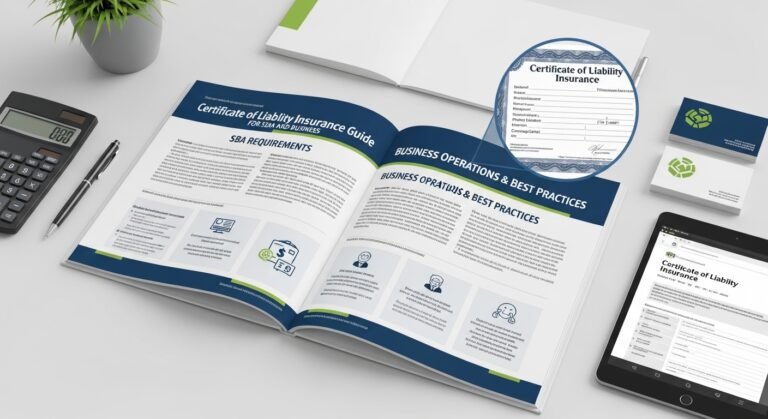
There is your most important document: your COI. This is an abbreviation for Certificate of Liability Insurance. This is a summary of your coverage to one page. It displays your types of policies, limits and effective dates for a policy. It is proof that you have insurance.
Getting possession of this document is easy. It gets issued for you by your insurance provider. You can request one whenever you are signing a new client. It shows that you are a professional and prepared. It shows you are serious about taking risk.
Clients often need to be included as an ‘additional insured.’ This provides them with a direct policy with protection under your policy. A Certificate of Liability Insurance is a must in this case. It is your passport to larger and greater projects.
Choosing a Provider and Understanding Costs
Finding the right insurance provider is the key. You need a company which is familiar with freelancers. They should provide flexible policies. They should additionally offer wonderful service. This is particularly the case when a claim arises.
Look for providers that investors give good ratings. This demonstrates that they are able to pay claims. Read reviews from other similar small business owners. Concentrate upon the ease of answer with “get a quote.” And how easy it is to administer your policy online. Some more contemporary insurers, such as Biberk Insurance, is specialized in this digital first approach.
The freelancer business insurance cost may vary a lot. There are a number of factors that affect your premium. Your field of life (your profession) is the biggest factor. Professions which carry a higher risk pay more. A structural engineer pays more than a copywriter.
Also, your annual revenue plays a part. The more money you make, the more of a risk it is. The coverage that you pick on is important. A policy that costs $2 million costs more than a policy that costs $1 million. It will also matter your claims history. A clean record will help to keep your costs down.
As the legendary investor Warren Buffet wisely said:
“It takes 20 years to build a reputation and five minutes to ruin it. If you think about that, you’ll do things differently.”
Insurance is doing things differently. It is about safeguarding the reputation for which you worked so hard. The cost is a small one to pay. It insures your business against disastrous event. Never look at it as purely an expense. Look at It as a Strategic Investment.
Moving Beyond Liability: Other Essential Coverage
The debate of Professional Indemnity vs Public Liability is at the centre. However, your risk management should not stop at that. Freelancers have other assets to protect. Your business equipment is one of the biggest ones. This is especially true of remote workers.
Your laptop, your camera and software are tools of your trade. What if they are stolen from or damaged? A fire or flood in your home office may be devastating. Your typical homeowner’s insurance may not insurances business equipment.
This is where other policies are needed. Commercial Property Insurance Commercial property insurance offers protection to your physical business assets. It involves your gear whether it at your office or on the go. It makes sure that you can get back to work again quickly and fast after a loss to work.
Cyber liability insurance is another example of an emerging need. Data breaches are becoming a more common occurrence. If you deal with client information, you are a target. This policy has to cover the costs of a cyber attack. This includes notification costs, credit monitoring and more. Think About Your Entire Risk Profile. Protect your every facet of your freelance business.

Following Authoritative Guidance on Business Risk
You music is not something you have to navigate through on your own. There are places to turn to that have experts to assist. Government and non-profit organizations offer direction. They help small business owners to make smart decisions. The application of them constitutes another level of security.
The U.S. Small Business Administration (SBA) is a great starting point. They provide official guidelines on insurance for business. Their website is a treasure trove of information. It is an outline of the types of insurance you may need.
Another invaluable resource is SCORE. This is a non-profit offering free mentorship. They put you into contact with seasoned business executives. You can seek expert advice in risk management. They can help you to access your unique risks.
Following the above is a mark of a true professional. It demonstrates that you are determined to create a strong business. It makes your operations in line with industry best practices. This commitment will make you extend your confidence to your clients.
Making the Right Choice: Professional Indemnity vs Public Liability
The bottom line is the decision is yours to make. Assess what you are doing in business each day. Is your advice or creative services? Unless you almost certainly need Professional Indemnity? Do you meet clients/work on-site? Public Liability is Non-Negotiable.
For most freelancers, the answer is neither one nor the other. It is both. These policies address two significant risks that are distinct from one another. Having just one leaves a dangerous hole. A gap that a savvy client lawyer will find. Your livelihood is of prime importance to you.
Don’t feel like waiting for a claim to take place. Be aggressive about your risk management. Secure your coverage today. It is the smartest business move you can take. It lets you stick to what you do well and do it. It enables you to build your freelance business with confidence.

Frequently Asked Questions (FAQs)
For most freelancers, yes. One is on bad advice (financial loss). The other covers for accidents (physical damage). They help to protect you from various, common risks. Both are the safest strategy.
This is dependent on your clients and industry. Many corporate clients demand at least $1 million worth of coverage. Review your contracts very carefully. It is better you have more than needed for that coverage. The difference in cost is in many cases quite small.
The freelancer business insurance cost is remarkably cost-effective. It all depends on your profession and revenue. For a lot of people it’s a little bit of money every month. It is responsible for providing millions in protection. It is a great investment toward your security.
Yes. You may have clients come over to your home. You may meet them elsewhere. You could have a delivery man trip and fall. Liability insurance for remote workers is very important. Your home is a workplace.
You are personally responsible for all costs. This includes legal fees and any settlement. A lawsuit could seize your business assets. It could even take your personal assets. This includes your home and savings.
Conclusion: Securing Your Freelance Future with the Right Insurance
Your freelance journey is the one of ambition. You have built a business out of your skills. Now, you have to protect that business. The discussion of Professional Indemnity vs Public Liability is not a mere academic matter. As such, it is the basis of your financial security.
Professional Indemnity is your protection against allegations of professional misconduct. It protects your advice, your designs and your codes. Public Liability is your shield to physical accidents. It insures you against the unpredictable nature of working with people. They are two pillars of a good business.
Selecting the appropriate insurance is not a sign of fear. It is a mark of professionalism. It sends your clients the message that you are serious. It enables you to work on larger projects. It enables you to and operate with a confident and free spirit. Your future self will thank you that you have made this smart investment. Don’t leave your success to chance; understand the difference between Professional Indemnity vs Public Liability.